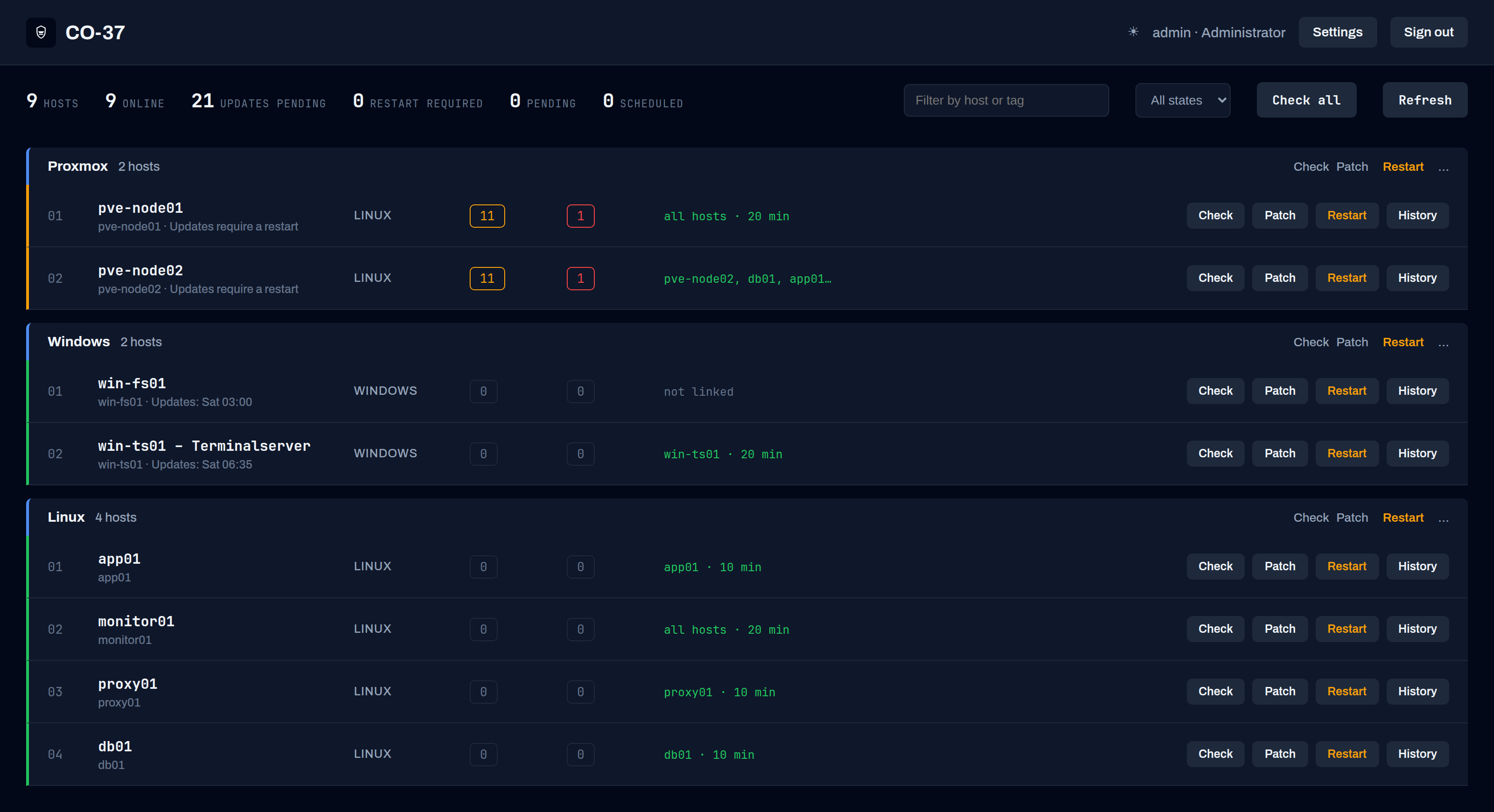
See pending updates on Linux and Windows hosts at a glance, run patches manually,
and set your own schedules. Integrate with Checkmk, and plan reboots and downtimes.
Hosts enrol themselves, an administrator approves them — from then on they are
part of the system and can be managed. The heartbeat drives follow-up scans after a
patch run and clears out stuck jobs.
Agents for four platforms
Windows, Red Hat, SUSE Linux Enterprise/openSUSE Leap and Debian/Ubuntu — .msi, .rpm and .deb, all built from a single codebase. One version number for server, agent and watcher.
Checkmk integration
Through the official REST API. Downtimes are set automatically before reboots, for the configured duration, or manually whenever you need one.
No scheduler service
Schedules, follow-up scans and clearing stuck jobs are all handled on the heartbeat — there is no separate scheduling service alongside it that could drift out of step.
Signed updates
Release package and agent code are signed with Ed25519. The signature is checked twice — in the backend on upload and in the watcher before unpacking — and an older package is rejected.
Logins without global tokens
No permanent admin key. Every login is bound to a session, TOTP is available as a second factor, and running or scheduling a reboot needs its own permission, granted per account.
Staged rollout
By default, new agent versions go to a pilot host first; the rest follow only once it has reported the new version. Optionally all at once — or not automatically at all.